
Frequently Asked Questions
-
I work with organizations of all sizes, from solo operations to large brands. My clients are experts in their fields, but don’t always have an easy way to explain what they do to customers. My job is to help translate that expertise into clear visuals that people quickly understand
-
Yes, I regularly collaborate with marketing departments, agencies, and production companies.
Sometimes that means filming interviews or b-roll locally. Other times I’m editing, creating motion graphics, animation, or photography that becomes part of a larger campaign.
I’m comfortable taking direction, matching established brand styles, and fitting into an existing production workflow.
Whether I’m leading a project or supporting a team, the goal is the same: clear communication and exceeding expectations.
-
I live in Columbus and work with local organizations, but I do a lot of jobs remotely. Planning, editing, animation, and design can all be handled from anywhere.
-
Projects often combine several approaches depending on the need:
• Video production (interviews, demonstrations, promotional videos)
• Motion graphics and animation
• Video editing and post-production
• Photography
• Illustration and concept visuals
• Creative direction and consulting
The goal is not to fit your project into a category, but to choose the right tools for the message.
-
You work directly with me from start to finish. I plan the project, shoot, animate, edit, and deliver it myself. That keeps communication simple and avoids information getting lost in translation.
-
Yes! That’s a big part of the job. Most businesses already know their subject extremely well. The challenge is deciding what information matters most and when to say it. I help organize the message, suggest when the picture should tell the story, which words provide most impact, and shape the structure so your audience understands quickly.
-
Not at all. That’s how many projects begin.
You don’t need to know whether you need a video, animation, or photography. You just need to know what you’re trying to communicate. We’ll talk through your goals, audience, and where the visuals will be used, and I’ll help recommend the right approach.
-
Completely normal. Almost no one I work with is a professional performer. They know their business and that’s what matters most. I guide people through the process, keep it relaxed, and structure the filming process so it feels like a conversation rather than a performance. My goal is for you to sound like yourself.
-
As involved as you want to be. Some clients like reviewing every step. Other prefer to approve the plan and see a near-final version. I build projects with flexibility in mind so you can give feedback without requiring me to start from scratch.
-
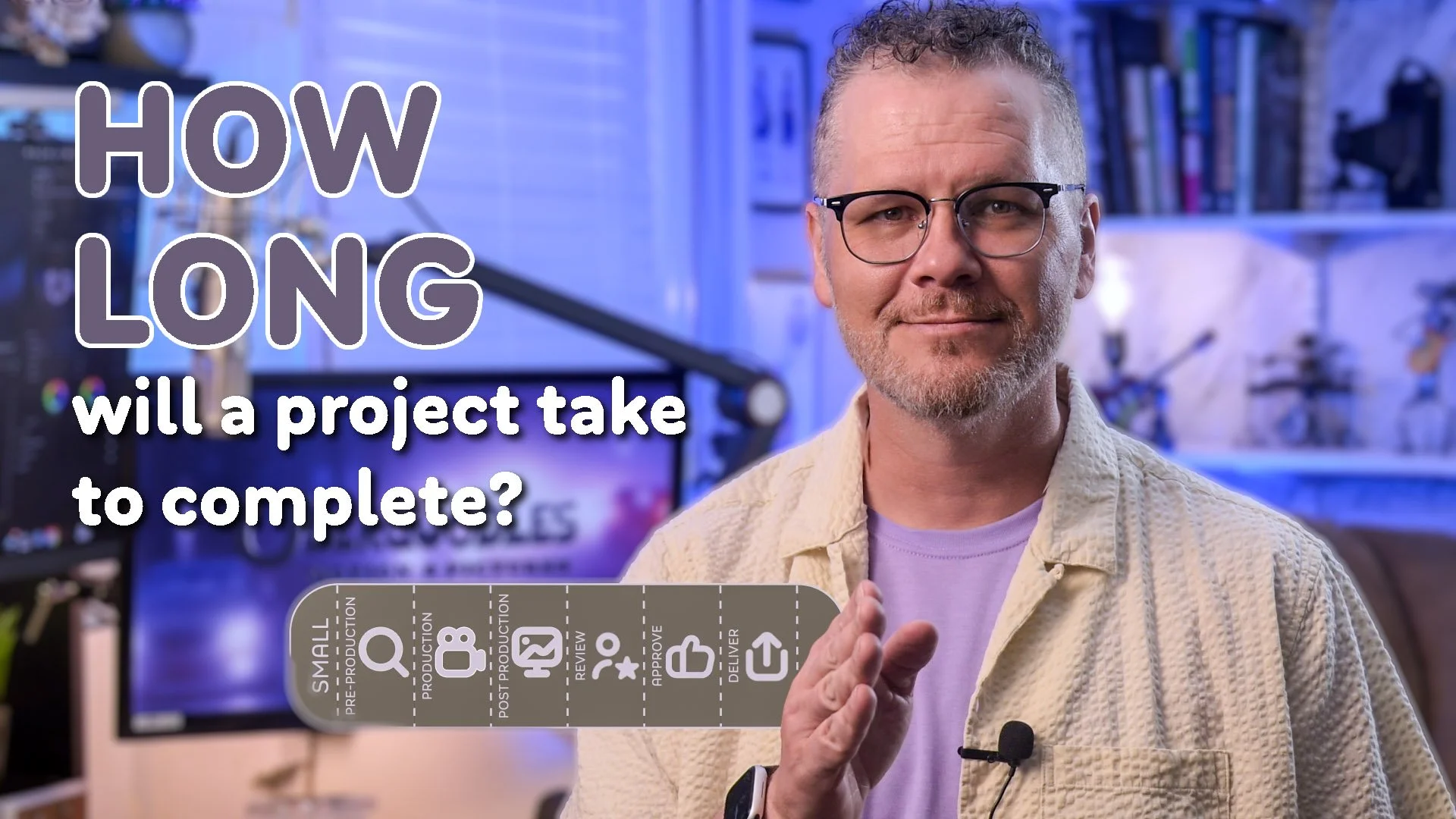
It varies by scope.
A simple shoot and edit might take a couple of weeks.
A more complex project with scripting, filming, animation and several components may take months.
Often a turnaround can be based around your hard deadline.
I’ll give you a clear timeline before we start so you know what to expect.
-
Yes, and often it is planned as part of a larger project. Planning to shoot and edit smaller pieces that are tailored to social platforms help make your message go farther.
I also do quick social only shoots, but still do the planning to make sure they go smoothly and are fun.
-
Every project is different because every message is different. Costs depend on planning, complexity, and post-production.
After we discuss your goals, I’ll outline options at different levels so you can decide what makes sense for your budget. I’m happy to a scale a project to something practical.
-
Usually yes. Especially when customers need to understand what you do before contacting you.
Clear visuals reduce repeated explanations, help establish credibility, and make websites more effective. Many clients find that one well-made piece can serve them for years across multiple platforms.
-
You do.
Once a project is complete and paid for, you’re free to use the finished material in your marketing, website, and social media.
If there are any limitations due to talent, licensing, or other factors associated with the project, they will be spelled out before we start.
-
The easiest way is the contact form. Tell me a little about your project and what you’re hoping to explain. I’ll follow up and will set up a short conversation to see if it’s a good fit.
Product Photography and Video
-
Most products need a small set of specific images:
A clean hero image (the catalog shot)
Detail shots (materials and build quality)
Scale reference (in a hand or real environment)
Lifestyle images (how it’s used)
Instructional or feature graphics
Different images answer different buyer questions and when planning a shoot I focus on what those questions are for your product and how best to answer them.
-
I can do either, and I’ll help you decide which makes the most sense.
The best option usually depends on:
product size or sensitivity
whether it’s a prototype or confidential
the level of technical expertise needed on site
budget and logistics
If a product is large, fragile, pre-release, or requires hands-on knowledge from your team, I can travel to your location and create studio-quality lighting and backgrounds on site. This keeps the product safe and allows your team to be directly involved in the process.
For smaller items, shipping is typically the easiest and most cost-effective solution. I regularly film and photograph shipped products and handle them carefully, documenting condition on arrival and return.
For businesses in the Columbus, Georgia area, you get the best of both worlds; you can be as involved as you’d like while avoiding most of the shipping and coordination hassles.
-
Bring the best possible version of the product.
I usually recommend:
multiple samples
packaging
accessories
replacement labels if available
Cameras see tiny flaws people miss:
fingerprints
scratches
misaligned labels
Having backup pieces saves a lot of retouching time.
I’ll also help you decide what matters and what doesn’t before the shoot so you’re not guessing.
-
Yes! Not only is video the most convenient way for a consumer to experience your product online, it builds trust because it shows how a product functions in real life.
A short product video answers questions photos can’t:
• How big is it really?
• How does it open?
• Is it sturdy?
• Is it complicated?Product videos often work best when made simple: a clean demonstration or short explanation, not a commercial. That builds confidence.
-
Yes. And often 3D renderings are the best way to showcase a product.
3D is especially useful when:
the product doesn’t exist yet
internal parts need to be shown
color variations are required
you need perfectly consistent angles
Often the strongest approach is a combination of photography and 3D so everything matches across packaging, web, and marketing.
-
Yes, and it saves time.
Engineering files can be converted into:
marketing visuals
animations
exploded views
instructional graphics
That allows you to start marketing before manufacturing is finished and keeps everything technically accurate.
It’s a great option for manufacturers, Kickstarter launches, and product preorders.
-
Yes, and Amazon images are a very specific kind of photography.
Amazon has strict requirements. For example, the main image must be on a pure white background and the product should fill most of the frame with a high resolution for zooming.
Beyond that, Amazon and other e-commerce platforms replace the in-store experience so the images need to provide the customer the confidence to buy the product without being able to hold it.
These are considerations I plan before the camera comes out so the listing feels clear instead of crowded.
-
A+ content is the enhanced section on an Amazon listing with graphics, diagrams, comparison charts, and brand storytelling.
Think of it as your product’s mini-website inside Amazon. It’s where you explain:
how the product works
why it’s different
who it’s for
Good A+ content reduces returns and increases confidence because customers understand the product before buying.
-
Professional product photography isn’t about megapixels. It’s about control.
Most product images fail because of reflections, scale confusion, poor lighting, or inconsistent color. Phones are amazing for documenting a product. Not so great for selling a product.
Customers are making decisions in seconds. They don’t just want to know what a product looks like. They’re wondering:
How big is it?
What does it feel like?
Is it quality?
Can I trust this company?
Lighting, lens choice, background, and composition answer those questions before a single word of copy is read.